
Which camera to film your trail runs?
Contents
- 01What matters when you make trail content
- 02The five cameras at a glance
- 03DJI Osmo Action 6: the Reels and TikTok camera
- 04DJI Osmo Pocket 4: for telling the story, face to camera
- 05Insta360 X6: the camera operator you don't have
- 06DJI Osmo 360 II: the cheaper 360° option
- 07GoPro Mission 1 Pro: for creators who edit real films
- 08The gear that makes the difference
- 09Our filming tips
- 10Frequently asked questions
- 11In short
The short answer. It depends on what you post. For running footage in vertical format, get the DJI Osmo Action 6: 149 g, native vertical 4K and 50 GB of built-in storage. For talking to camera and telling the story of your runs, the DJI Osmo Pocket 4 and its stabilised gimbal are hard to beat. For third-person shots with nobody to film you, choose a 360° camera: the Insta360 X6 or the DJI Osmo 360 II. And if you edit proper films for YouTube, the GoPro Mission 1 Pro is the only one here that delivers footage ready for colour grading.
Our picks
- DJI Osmo Action 6 Best for vertical POV Check the price on Amazon
- DJI Osmo Pocket 4 Best for vlogging Check the price on Amazon
- Insta360 X6 Best 360° camera Check the price on Amazon
- DJI Osmo 360 II Most affordable 360° Check the price on Amazon
- GoPro Mission 1 Pro The filmmakers’ choice Check the price on Amazon
What matters when you make trail content
Filming a run for yourself and filming for an audience are two different briefs. Six criteria make the difference.
Vertical format
Reels, TikTok and Shorts are watched in 9:16. A camera that shoots vertical, or whose image crops cleanly, keeps your resolution.
Sound
Wind and breathing overload built-in mics. As soon as you talk to camera, a wireless mic changes everything.
Filming yourself
Front screen, subject tracking, selfie stick, 360° camera: you need varied shots without a camera operator.
Weight and battery
You carry the camera for hours, and claimed battery figures are measured in ideal conditions.
Night and cold
A large sensor keeps noise down at dusk; a battery that copes with cold avoids a shutdown mid-run.
Editing time
Built-in storage, fast transfers and auto-editing matter when you post several times a week.

The five cameras at a glance
| DJI Osmo Action 6 | DJI Osmo Pocket 4 | Insta360 X6 | DJI Osmo 360 II | GoPro Mission 1 Pro | |
|---|---|---|---|---|---|
| Best for | POV and vertical | Talking to camera | Third-person shots | Third-person shots | Graded films |
| Sensor | 1/1.1-inch, square | 1-inch | 2 × 1/1.1-inch | 2 × 1/1.1-inch, square | 1-inch, 50 MP |
| Video | 8K30, native vertical 4K | 4K, 4K240 slow motion | 360° 8K50 | 360° 8K60 | 8K60, Open Gate 8K30 |
| Log profile | D-Log M | 10-bit D-Log | — | — | 10-bit GP-Log2 |
| Stabilisation | Electronic | 3-axis gimbal | Electronic, 360° | Electronic, 360° | Electronic |
| Weight | 149 g | not published | 196 g | 183 g | 207 g |
| Waterproof without housing | 20 m | not claimed | 20 m | 10 m | 20 m |
| Claimed battery life | 240 min (1080p24) | 240 min (1080p24) | 140 min (360° 8K30) | 100 min (8K30) | over 3 h measured in 4K30 |
| Built-in storage | 50 GB | 107 GB | no | — | no |
| UK launch price | varies by bundle | from £429 | £619 | £509 | £599.99 |
Sources: official DJI Osmo Action 6 specifications; DJI Osmo Pocket 4 press release and prices reported by RedShark News; Insta360 X6 press release, weight and UK price reported by RedShark News; DJI Osmo 360 II from TechRadar and l'Éclaireur Fnac; GoPro Mission 1 Pro from Presse-citron and CameraJabber. A dash means the source does not say.
DJI Osmo Action 6: the Reels and TikTok camera
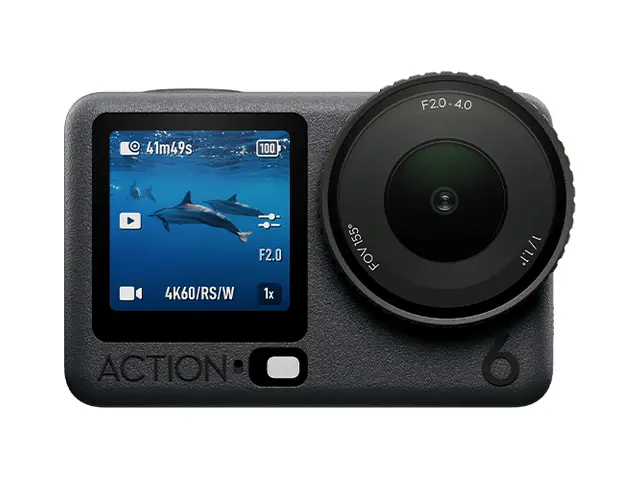
This is the camera to take on every run. At 149 g, it is the lightest here, and it mounts anywhere: chest harness, pack strap, hand.
Its real strength for creators is its square sensor. It shoots vertical 9:16 up to 4K without turning the camera, and even square 4K (3,840 × 3,840) so you can pick the format in the edit. Its variable aperture, from f/2 to f/4, is rare on an action camera: useful at dusk as well as in full sun on a ridge.
The 50 GB of built-in storage is a safety net: a microSD card that pops out will not cost you the run. The dual screens help with framing when you film yourself.
DJI Osmo Action 6
Strengths
- Lightest here: 149 g
- Vertical 9:16 up to 4K without turning the camera
- Variable aperture f/2 to f/4
- 50 GB built-in storage
Limits
- Built-in mics limited for talking while running
- Claimed battery life measured in 1080p, screens off
Best for: creators who mainly post short vertical clips filmed on the run.
DJI Osmo Pocket 4: for telling the story, face to camera
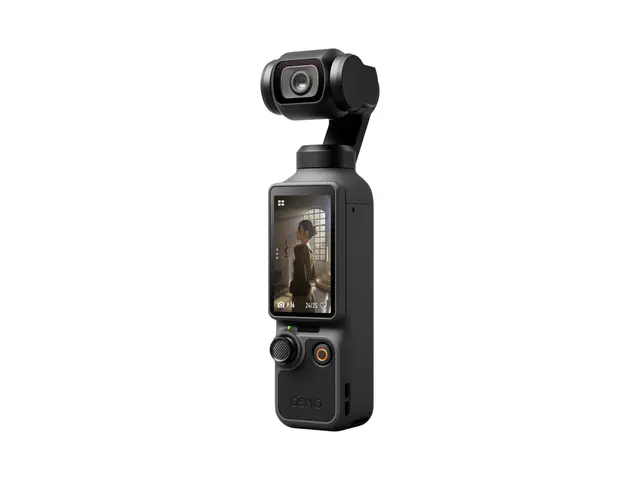
The Pocket 4 is not an action camera: it is a vlogging camera on a three-axis gimbal. It is the one you want for the moments when you talk: before the start, at the summit, walking up a climb, at an aid station.
Its 1-inch sensor and 10-bit D-Log profile deliver polished footage, and its mechanical gimbal smooths out walking movements better than electronic stabilisation. ActiveTrack 7.0 keeps you in frame, up to 4x zoom. Above all, it connects directly to DJI Mic 2, Mic 3 and Mic Mini transmitters, with no receiver, and records up to four audio tracks. Its 107 GB of built-in storage transfers at 800 MB/s.
DJI Osmo Pocket 4
From £429 at launch (Essential Combo)
Strengths
- Mechanical 3-axis gimbal
- 1-inch sensor, 10-bit D-Log
- Direct connection to DJI Mic 2, Mic 3 and Mic Mini
- 107 GB built-in storage
Limits
- No claimed water or shock resistance
- Delicate gimbal: keep it packed while running
Best for: creators who tell the story of their runs and races, in vlogs or long-form videos.
Insta360 X6: the camera operator you don't have
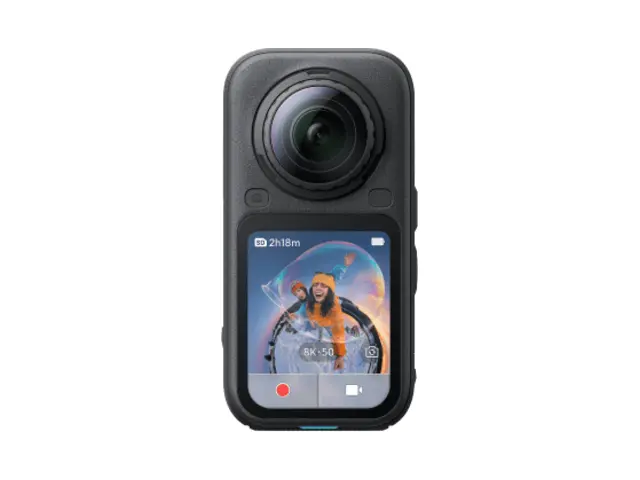
A 360° camera films everything around it. In the edit, you choose the framing: facing you, behind you, towards the view, horizontal or vertical. On the end of a selfie stick, it gives third-person shots that look like someone was following you. The stick disappears in the final render.
Released in August 2026, the X6 shoots 360° 8K at 50 frames per second with two 1/1.1-inch sensors. It also works as a standard camera in single-lens mode, up to 5K. Insta360 claims 140 minutes of 360° 8K30 recording and 20 m waterproofing without a housing. InstaFrame 2.0 auto-reframing and Auto Edit 2.0 cut down the time spent in the app.

Insta360 X6
£619 at launch (Standard Bundle)
Strengths
- 360° 8K at 50 fps
- Framing chosen in the edit, horizontal or vertical
- Waterproof to 20 m without a housing
- Auto-reframing and auto-editing
Limits
- 360° reframing takes editing time
- 196 g, among the heaviest
Best for: creators who want spectacular shots with nobody to film them.
DJI Osmo 360 II: the cheaper 360° option
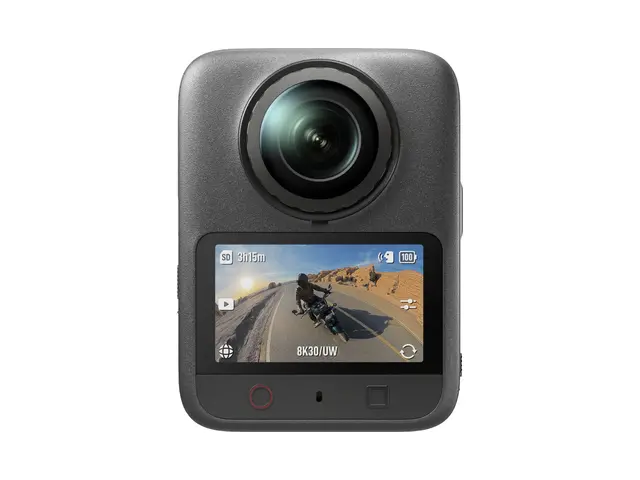
Launched in Europe in September 2026, the Osmo 360 II is the first 360° camera to shoot native 8K at 60 frames per second. Its two square 1/1.1-inch sensors are claimed to be equivalent to a 1-inch sensor. Its Boost Video mode records 4K at up to 120 fps directly in 16:9, 4:3 or 9:16. Its front lenses are user-replaceable if scratched: a real plus on rocky trails.
It is cheaper than the Insta360 X6, at £509 for the Standard Combo according to TechRadar.
DJI Osmo 360 II
£509 at launch (Standard Combo)
Strengths
- First 360° camera with native 8K at 60 fps
- 4K120 mode straight to 9:16
- User-replaceable lenses
Limits
- Only waterproof to 10 m without a housing
- Can overheat in 8K60, according to TechRadar
Best for: creators who want 360° video on a tighter budget.
GoPro Mission 1 Pro: for creators who edit real films
The Mission 1 Pro is for creators who post proper films on YouTube: race stories, training documentaries, brand films. Its 1-inch sensor, 8K at 60 frames per second and 10-bit GP-Log2 profile produce footage that holds up to colour grading.
Its Open Gate mode records the full 4:3 sensor area in 8K30. It is the ideal tool for posting everywhere: from a single shot, you export a horizontal version for YouTube and a vertical one for Instagram, both above 4K resolution. The Creator Edition adds a wireless mic kit and a Media Mod.

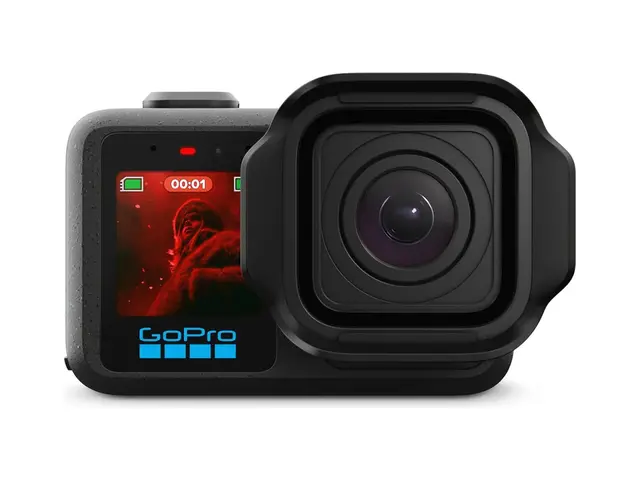
GoPro Mission 1 Pro
£599.99 (list price)
Strengths
- 1-inch sensor, 8K at 60 fps
- 10-bit GP-Log2, ready for grading
- Open Gate: horizontal and vertical from one shot
Limits
- Heaviest here: 207 g
- Can overheat in 8K60 and 4K240 when stationary
Best for: creators who edit and grade their videos, and those who work with brands.
The gear that makes the difference
The camera is not everything. Three accessories will improve your videos more than switching models.
A wireless microphone. The best-value purchase. A clear voice keeps viewers watching, even over average footage. The DJI Mic Mini, Mic 2 and Mic 3 connect directly to the Osmo Pocket 4. On an action camera, check compatibility before you buy, and always use a windshield.
Check the DJI Mic Mini on Amazon
A spare battery. Cold and 4K drain a battery far faster than the claimed figures. Keep the spare close to your body, not in your pack.
A short selfie stick. Essential with a 360° camera, useful with all the others to vary your angles. On race day, check the rules: some events restrict sticks in narrow sections and at aid stations.
Our filming tips
These tips come from our day job: we film trail running for brands and events.

- Vary your shot sizes. A wide shot of the landscape, a mid shot of you running, a close-up of your shoes or your breathing. Three shots tell more than one long sequence from a chest mount.
- Set the camera down. Wedge it on a rock, run past it, come back for it. That static shot, with you entering and leaving the frame, is one of the most effective in trail running.
- Talk during breaks. Your voice will be clearer at the summit or an aid station than halfway up a climb.
- Film in low-angle light. The first and last hours of the day add depth to the terrain and to faces.
- Do not film technical descents handheld. A fall costs more than a missed shot. Mount the camera, or put it away.
To see what a trail shoot looks like in real conditions, by day and by night, watch our film made during UTMB 2026. Are you a brand looking for trail content that stands out? Let’s talk.
Frequently asked questions
Which camera is best for trail running Reels and TikToks?
One that shoots vertical natively. The DJI Osmo Action 6 records 9:16 up to 4K without turning the camera, thanks to its square sensor.
Is an action camera enough for a trail running YouTube channel?
For vlogs, yes, as long as you add a wireless mic. For graded films, a 10-bit camera such as the GoPro Mission 1 Pro leaves far more room in the edit.
Do I need an external microphone?
As soon as you talk to camera, yes. Wind and breathing overload built-in mics. The Osmo Pocket 4 connects directly to the DJI Mic 2, Mic 3 and Mic Mini.
360° camera or action camera?
An action camera is simpler and faster to edit. A 360° camera gives third-person shots with no camera operator, but takes more editing time.
Can you film properly at night?
Yes, with a large sensor. All five cameras in this guide have 1/1.1-inch or 1-inch sensors. Head torch light remains hard to handle for every camera, though.
In short
- Short vertical clips filmed on the run: DJI Osmo Action 6.
- Vlogs and face-to-camera stories: DJI Osmo Pocket 4.
- Third-person shots with no camera operator: Insta360 X6, or the DJI Osmo 360 II on a tighter budget.
- Edited, graded films for YouTube and brands: GoPro Mission 1 Pro.
Many creators end up combining two cameras: an action or 360° camera for the running, a Pocket for talking. If you can only buy one, choose the one that matches the format you post most.
Buying guide based on manufacturers’ specifications and public sources, linked in the text. WATT has not tested these products for this article.
Disclosure: this article contains affiliate links. If you buy through them, WATT Production may earn a commission at no extra cost to you. Our product choices never depend on commissions. As an Amazon Associate, WATT Production earns from qualifying purchases. Our editorial policy
A filmmaker since 2022 and an athlete at heart, Victor Cazaubon practises the sports he films. That double culture puts him in the right place at the right moment, fluent in the language of athletes and brands alike.
More about WATT