
Which head torch for night trail running and the SaintéLyon?
Contents
The short answer. For the SaintéLyon or any night trail longer than four hours, aim for a rechargeable head torch of at least 1,000 lumens, with reactive lighting and at least seven hours on its everyday setting. The Petzl Swift RL ticks those boxes at 92 g. If you want more margin, the Petzl NAO RL runs for 10 hours at 250 lumens in reactive mode. Whatever you choose, the race rules require a spare battery or spare batteries.
Useful output
Allow 200 to 300 lumens on runnable trails, 1,000 or more for technical descents and fog.
Everyday-mode battery life
That is what counts, not maximum output: aim for at least seven hours.
Reactive lighting
The beam adapts to what you look at: less battery used, less dazzle for others.
Weight
From 79 to 213 g in our selection: a gap you feel after a night of running.
Cold
Lithium-ion batteries lose capacity: keep the spare close to your body.
Race rules
The SaintéLyon requires one head torch and a spare battery; two torches for the Lyon SaintéLyon.
Our picks
- Petzl Swift RL The best balance Check the price on Amazon
- Petzl NAO RL For the whole night Check the price on Amazon
- Black Diamond Distance 1500 The toughest Check the price on Amazon
- Petzl Iko Core Best back-up torch Check the price on Amazon
What the SaintéLyon 2026 rules require
The 72nd SaintéLyon leaves Saint-Étienne overnight from 28 to 29 November 2026, heading for Lyon. According to the official rules:
- SaintéLyon (82 km): one head torch, with spare batteries.
- Lyon SaintéLyon (out and back): two head torches, with spare batteries.
- Power bank: strongly recommended by the organisers.
The rules also include a “severe cold kit” that the organisers can make compulsory depending on the weather. Check it in the days before the race.
How many lumens do you really need?
The big number on the box is maximum output. Nobody runs a whole night at full power: at 1,500 lumens, most head torches last around two hours.
The figure that matters is the mode you will use most, and how long it lasts. On a runnable or waymarked trail, many runners are happy with 200 to 300 lumens. Full power is for technical descents, fog or spotting waymarks.

Reactive lighting: useful or gimmick?
Petzl calls this technology Reactive Lighting. A sensor measures the light reflected back and adjusts output continuously: the beam dims when you look at your watch or at the runner ahead, and brightens when you look up the trail.
In a crowded race like the SaintéLyon, where you are often surrounded by other head torches, it saves battery and avoids dazzling other runners. It is the main selling point of high-end models.

Cold, the enemy of battery life
Lithium-ion batteries lose capacity in the cold. In late November in the Monts du Lyonnais, night temperatures can drop below freezing.

Our picks
| Petzl Swift RL | Petzl NAO RL | Black Diamond Distance 1500 | Petzl Iko Core | |
|---|---|---|---|---|
| Max output | 1,200 lm | 1,500 lm | 1,500 lm | 500 lm |
| Weight | 92 g | 145 g | 213 g | 79 g |
| Battery | 2,350 mAh | 3,200 mAh | Removable, magnetic | 1,250 mAh, or 3 AAA batteries |
| Everyday mode | 275 lm: 7 to 55 h (reactive) | 250 lm: 10 h (reactive) | 300 lm: 8 h | 100 lm: 9 h |
| Water resistance | IPX4 | IPX4 | IP67 | IPX4 |
Sources: product specifications for the Petzl Swift RL, Petzl NAO RL and Petzl Iko Core (i-Run, 12 October 2026); Black Diamond. In reactive mode, run time depends on reflected light, hence the ranges.
Petzl Swift RL — the best balance
1,200 lumens for 92 g: the best output-to-weight ratio in this selection. In reactive mode, the standard level (275 lumens) lasts 7 to 55 hours depending on reflected light; in constant mode, 7 hours at 190 lumens. Enough for a fast SaintéLyon. For a slower runner, the compulsory spare battery becomes essential.
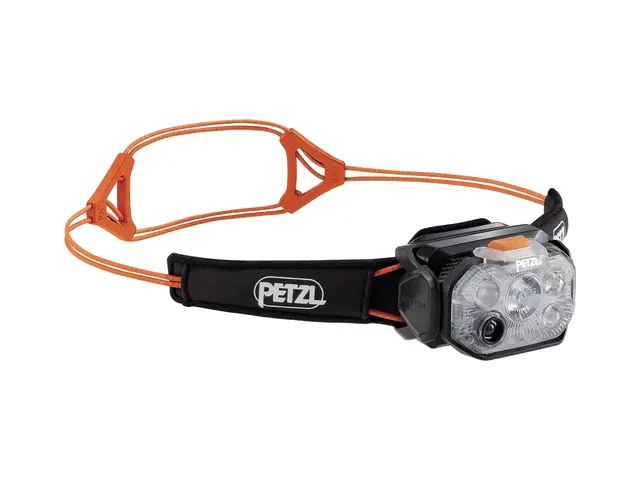
Petzl Swift RL
Strengths
- 1,200 lumens for 92 g
- Reactive lighting
- USB-C charging
Limits
- Only 2 hours at 800 lumens in constant mode
- A spare battery is essential for slower runners
Best for: most SaintéLyon runners and night trail runners.
Petzl NAO RL — to last the whole night
With its 3,200 mAh battery, the NAO RL runs for 10 hours at 250 lumens in reactive mode. It is the only one here that can cover a full night without a battery change, at a moderate pace. According to the manufacturer, its battery can also be used as an emergency power source. It weighs 53 g more than the Swift RL.
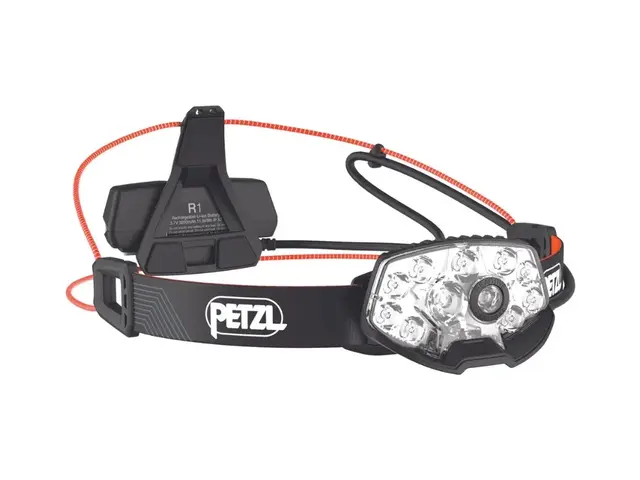
Petzl NAO RL
Strengths
- 10 hours at 250 lumens in reactive mode
- 1,500 lumens maximum
- Battery usable as a back-up, according to Petzl
Limits
- 145 g, 53 g more than the Swift RL
- 3.5-hour charge
Best for: runners expecting more than nine hours on the SaintéLyon, and night ultras.
Black Diamond Distance 1500 — the toughest
IP67-rated, so protected against dust and temporary immersion, with a magnetic battery you can swap in seconds, even wearing gloves. It is also the heaviest: 213 g. It was out of stock on Black Diamond’s website at the time of writing.
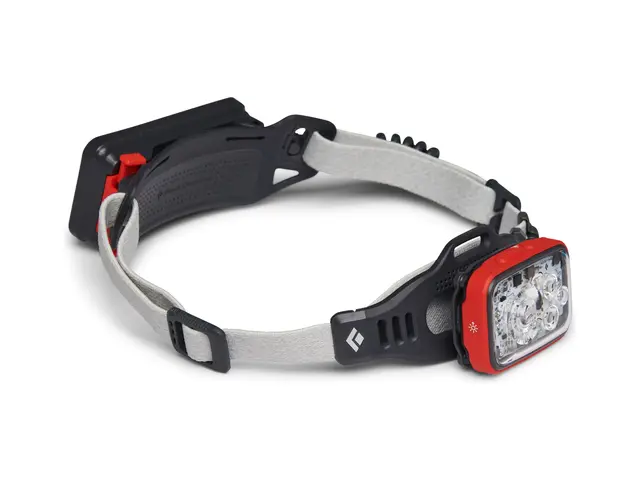
Black Diamond Distance 1500
Strengths
- IP67 rated
- Magnetic battery you can swap with gloves on
- 8 hours at 300 lumens
Limits
- Heaviest here: 213 g
- Out of stock on Black Diamond’s website at the time of writing
Best for: very wet conditions, and runners who would rather swap batteries than count lumens.
Petzl Iko Core — the ideal back-up torch
500 lumens, 79 g, and the option of running on three AAA batteries. An excellent choice for the second head torch required on the Lyon SaintéLyon, or for runners who mostly stay on lit roads.
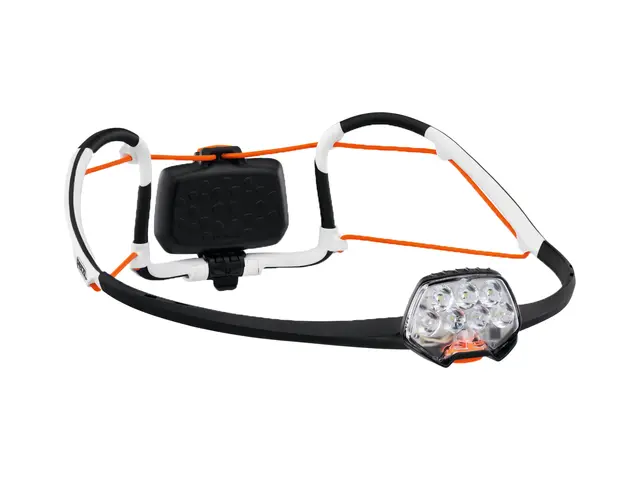
Petzl Iko Core
Strengths
- 79 g, the lightest
- Also runs on 3 AAA batteries
- 9 hours at 100 lumens
Limits
- 500 lumens maximum, 300 on AAA batteries
- No reactive lighting
Best for: a back-up torch, or a first purchase on a small budget.
Through the lens: why a line of head torches is so hard to film
A ribbon of head torches along a ridge at night is one of the strongest images in trail running. It is also one of the hardest to get right. Head torches are points of intense light against an almost black background: the camera has to choose between blown-out lights and an invisible landscape.
If someone is filming you during the race, one simple gesture helps a lot: lower your head as you pass the lens. A 1,000-lumen beam straight into the lens wipes out the rest of the image.

To film your own night runs, see our guide Which camera to film your trail runs?
Frequently asked questions
How many lumens do you need for the SaintéLyon?
On runnable sections, 200 to 300 lumens is enough for many runners. A reserve of 1,000 lumens or more helps on descents and in fog.
Do you need two head torches for the SaintéLyon?
The 2026 rules require one head torch with spare batteries on the SaintéLyon, and two head torches on the Lyon SaintéLyon.
Rechargeable battery or AAA batteries?
A rechargeable battery gives more output and run time. AAA batteries can be found anywhere: that is the strength of a hybrid torch such as the Petzl Iko Core.
Is reactive lighting worth it?
In a crowded night race, yes: the torch dims on its own when you look close up, which saves battery and avoids dazzling other runners.
In short
- Best all-rounder: Petzl Swift RL.
- For a whole night without changing batteries: Petzl NAO RL.
- For the wettest conditions: Black Diamond Distance 1500.
- As a back-up or on a small budget: Petzl Iko Core.
Whatever you choose, test your head torch at night before race day, on the setting you will use in the race.
Buying guide based on manufacturers’ specifications and public sources, linked in the text. WATT has not tested these products for this article.
Disclosure: this article contains affiliate links. If you buy through them, WATT Production may earn a commission at no extra cost to you. Our product choices never depend on commissions. As an Amazon Associate, WATT Production earns from qualifying purchases. Our editorial policy

A filmmaker since 2022 and an athlete at heart, Victor Cazaubon practises the sports he films. That double culture puts him in the right place at the right moment, fluent in the language of athletes and brands alike.
More about WATT